Kids Coloring Book by Numbers
GOBEEZ YAZILIM TİCARETEducational
4.3100.00 Reviews
- Version
- 3.9
- Installs
- 100.00K
- Age Rating
- Everyone
Screenshots
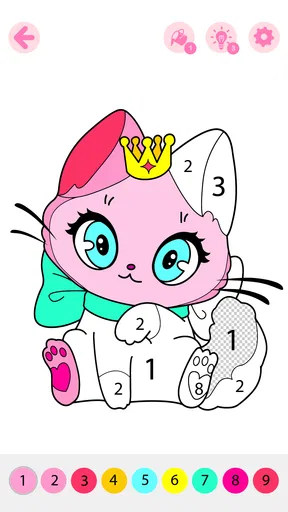

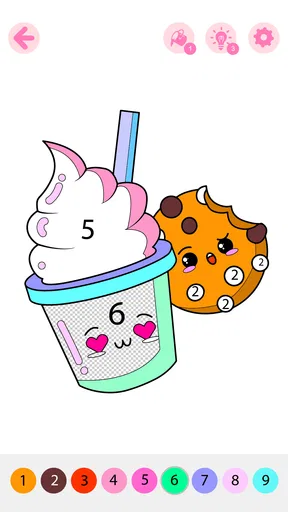
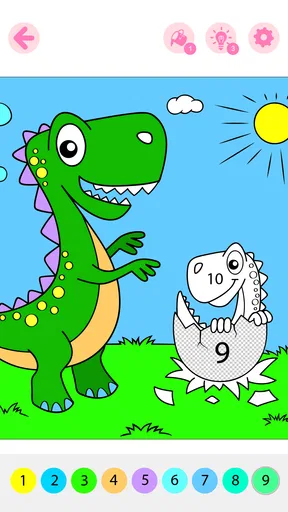
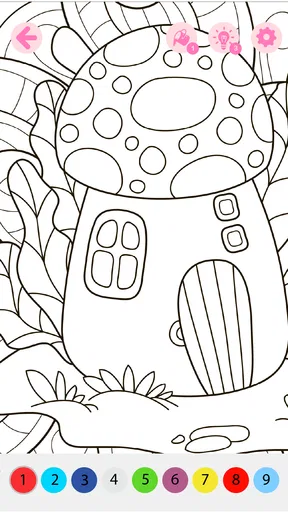
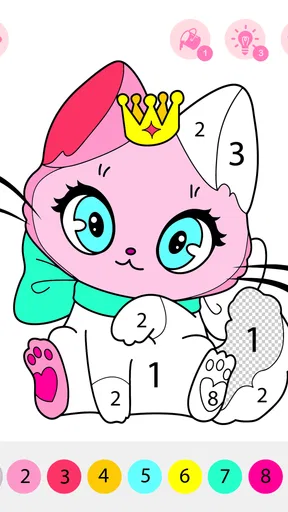


Our Review of Kids Coloring Book by Numbers
 Analysis by Appyee
I spent time with Kids Coloring Book by Numbers as a parent-focused educational game, and my first impression was that it is best understood as a shared activity rather than a traditional game with winners, levels, or competition. Its central appeal is simple: a child fills illustrated pictures by following numbered color areas, while an adult can sit nearby and turn the activity into a calm creative session. That makes it especially suitable for quiet moments when you want something more hands-on than a video and less demanding than a lesson.
The game is free to start, is suitable for Everyone, and comes from GOBEEZ YAZILIM TİCARET. It has reached over one hundred thousand installs, with a 4.3 average from around nine hundred ratings and about one hundred written reviews. Those figures give me the impression of a product that has found a modest but real audience, although they do not tell me whether every family will enjoy the same style of coloring.
What matters most here is the way the numbered format shapes the experience. A child is not choosing colors completely at random; the number on each section provides a small prompt and a clear next step. That can make the activity approachable for children who hesitate when faced with a blank page. At the same time, it means this is not a replacement for unrestricted drawing. I would recommend it to families looking for guided coloring, but I would not present it as a complete creative toolkit.
How the numbered coloring experience works in everyday use
The most useful way to use the game is to treat it as a short routine. I would open it when a child needs a quiet transition after school, during a relaxed weekend morning, or while an adult is close enough to talk. Instead of handing over the device and walking away immediately, I would first let the child choose a picture, identify a number, and locate the matching area. That small process turns tapping into a recognition exercise rather than simple screen activity.
For younger children, the numbered structure can reduce frustration. A blank digital canvas asks a child to make many decisions at once: what to draw, where to begin, and which colors belong together. Here, the picture already supplies a framework. The child can concentrate on matching and filling, then see the image become more complete. In my experience, that makes the first few minutes easier for a hesitant child, particularly one who enjoys finishing clear tasks.
Parents should still expect to provide occasional guidance. Number recognition and fine motor control vary widely, even among children of the same age. A child may understand the rule but tap outside a narrow area, or may lose interest if the artwork contains too many small sections. Sitting together for the first session is useful because it shows whether the child enjoys the matching process or would rather have more freedom.
One practical tip is to avoid presenting completion as a race. The numbered design naturally creates a temptation to fill areas as quickly as possible, but the better value comes from discussing the picture while it develops. Ask the child what the image might be, why a particular color is appearing, or which section they want to complete next. That changes the activity from repetitive tapping into a conversation with a visual result.
The game also fits a useful “one picture at a time” habit. Rather than allowing an unlimited session, I would suggest agreeing on a stopping point before beginning. This is not because the game is inherently stressful, but because coloring apps can make the next image feel immediately available. A finished picture provides a natural boundary, and a parent can then decide whether another round adds value or whether it is time to move on.
What children may learn from the format
The educational value is modest but concrete. Matching numbers with color areas can support early recognition, attention, and the ability to follow a visual instruction. Completing small sections also gives a child practice with persistence: the picture may look unfinished at first, yet steady work gradually reveals the result. I would describe this as light learning embedded in play, not as a substitute for structured teaching or handwriting practice.
There is also a useful distinction between recognition and understanding. A child may learn to find the correct numbered area without learning much about color mixing, artistic composition, or visual storytelling. If those are your goals, I would pair this game with physical crayons, blank paper, or an open-ended drawing app. The numbered approach is strongest when you want a gentle entry point and a clear task, not when you want to assess artistic ability.
For a parent, the finished image can become a conversation starter. You can ask the child to describe the objects, compare the colors, or invent a story around the scene. That extra step is where much of the educational benefit comes from. On its own, the game offers a guided activity; with an adult’s questions, it can support language and observation as well.
Where progress feels helpful and where it can create pressure
Progress in a coloring-by-numbers game is visible because incomplete areas stand out. That visibility can motivate children who like clear goals. A child can see exactly what remains and receive a satisfying sense of completion when the picture is filled. I found that more encouraging than an activity with no obvious endpoint, especially for a short session.
However, the same design can put pressure on children who dislike mistakes or unfinished work. If a child becomes upset when a section is difficult to tap, the numbered format may feel like a test rather than a relaxing activity. I would respond by slowing down, helping with the difficult area, and making it clear that the picture does not need to be perfect. If the child continues to focus on completion instead of enjoyment, a free drawing activity may be a better choice that day.
Adults should also watch for the difference between healthy persistence and forced persistence. Finishing every picture is not necessary for the game to be worthwhile. The strongest routine is flexible: stop after a short attempt if attention fades, return later if the child asks, and avoid using completion as a reward that must be earned. This approach keeps the app in the role of a creative tool rather than turning it into another obligation.
I would not assume that visible progress means the game has a deep progression system. The appeal appears to come from completing individual coloring scenes, not from building a complex profile or competing against other players. That is a positive point for families who want low-pressure play, but it may disappoint children who expect unlockable abilities, challenges, or a strong long-term game loop.
Spending, access, and the question of fairness
The game can be downloaded and used without an upfront purchase, which makes it easy to try before deciding whether it suits your child. In-app purchases are listed at amounts ranging from $9.99 to $149.99 per item. That range is important for parents because “free” does not mean every part of the experience is necessarily available at no cost. I would review the purchase screen together with an adult before letting a child explore independently.
I appreciate that the purchase context is visible enough to deserve deliberate attention rather than an automatic assumption that the game is entirely free. At the same time, I would not claim that every family will encounter the same locked content or the same prompts. The sensible approach is to treat the free download as a trial and make the buying decision yourself, not leave it to a child who may simply want to continue coloring.
There is also a fairness question in how the app feels to a child. If the most appealing images are placed behind purchases while the free selection feels limited, a child may interpret that as being stopped in the middle of play. If the available content is enough for occasional sessions, the free entry point may feel reasonable. Because that balance can affect the experience more than the basic coloring mechanic, I would test the opening selection before making it part of a regular routine.
For households managing spending carefully, I would use the game with device-level purchase protections and explain in simple language that tapping a button does not automatically mean something should be bought. That conversation is useful beyond this particular app. It teaches a child to ask before purchasing and helps prevent the common situation where a relaxing activity turns into an unexpected payment.
Is it competitive, and does fairness matter here?
This is not the kind of educational game I would choose for competition. Its strength is that a child works through a picture at their own pace, without needing to beat another player or compare a score. That makes it more naturally fair for children with different levels of reading, number recognition, patience, and motor control. An adult can help without giving one child an unfair advantage over another because there is no obvious contest to win.
That also means the game should not be judged by the standards of multiplayer learning titles or fast puzzle games. There is no reason to expect strategic depth, rankings, or competitive balance from a coloring activity. If your child is motivated by challenges against friends, timed tasks, or measurable high scores, this may feel too quiet. A conventional educational puzzle game would probably provide a stronger sense of challenge.
For siblings, I would recommend taking turns choosing pictures rather than asking them to complete the same image fastest. One child may be comfortable with small sections while another prefers larger areas. The app works better as a shared creative table than as a test of who can tap most accurately. That is a small change in how the adult frames the activity, but it can prevent unnecessary arguments.
Compared with physical coloring books, the digital format is cleaner and easier to reset, but it removes the tactile experience of paper and crayons. Compared with a blank drawing app, it offers more structure but less personal control. Compared with video content, it asks the child to make repeated choices and coordinate taps, although it still involves screen time. Those trade-offs make the choice fairly clear: use this when guidance and convenience matter more than unrestricted creativity or physical materials.
Device fit, age, and practical expectations
The Everyone age classification makes the game broadly approachable for families, but age labels are not a substitute for observing an individual child. A preschooler may need help finding numbers or controlling taps, while an older child may finish the basic activity quickly and ask for more creative freedom. I would introduce it according to the child’s ability, not simply the store category.
Its minimum operating-system requirement is Android 5.1, so it is compatible with a wide range of older Android devices. That is helpful if you are using a spare family tablet rather than a recent phone. Still, the practical experience will depend on the device’s screen size and responsiveness. A larger screen should make small coloring areas easier to target, while a small phone may be less comfortable for a child who is still developing precise touch control.
The current version is 3.9, and the game was released on September 18, 2019. I see that history as a reason to judge it by the activity it offers now rather than expecting the pace or presentation of a newly built game. The important question is not whether it has the newest style, but whether the numbered coloring loop remains comfortable for your child and whether the available content justifies continued use.
I would also prepare for shared-device realities. If a parent needs the phone for messages or work, a tablet or secondary device will make the activity less disruptive. If the child is using a device alone, agree on the session length and purchase rules first. Those simple arrangements matter more to a smooth experience than any single coloring picture.
What I would check before making it a regular activity
My first check would be the child’s reaction to guidance. Do they enjoy matching the numbers, or do they immediately ask to choose their own colors? If they enjoy the matching, the game has a clear role. If they want unrestricted drawing, I would offer paper or a freeform app alongside it rather than insisting that the numbered format is more educational.
My second check would be the balance between available content and purchase prompts. Since individual in-app purchases can range from $9.99 to $149.99, I would never let a child make that decision alone. I would explore the free experience myself, decide whether it provides enough variety for the intended use, and only then consider spending.
My third check would be attention quality. A child who calmly studies the image, identifies numbers, and talks about the result is using the game in a productive way. A child who repeatedly taps, becomes frustrated, or demands another picture without engaging may need a different activity. The same app can be useful in one family routine and unhelpful in another.
Finally, I would decide whether the goal is relaxation, early number practice, or artistic exploration. Kids Coloring Book by Numbers is most convincing for the first two. It is less suitable as the main tool for developing independent drawing skills. Knowing that distinction prevents disappointment and makes it easier to use the game for what it actually does well.
My trust verdict for families
I come away seeing this as a straightforward, low-pressure coloring game with a useful guided format. I like that it can give a child an immediate starting point, support simple number-and-color matching, and create an easy opportunity for an adult and child to work side by side. The free entry point also makes trying the activity less demanding than buying a physical product before knowing whether the child will enjoy it.
My reservations are equally practical. Numbered coloring is inherently narrower than open-ended art, and some children will find the repetition calming while others will find it restrictive. The purchase range deserves adult supervision, especially because a child may be focused on finishing a picture rather than understanding the cost. I would also avoid treating the game’s completion loop as a measure of intelligence, patience, or artistic success.
For a family wanting a quiet Android activity for an Everyone audience, I think it is worth trying with an adult present. I would recommend it most strongly for children who like clear instructions and visible progress. I would steer families toward a physical coloring book or free-drawing tool when tactile play, imagination, or complete color choice is the priority.
In short, I would keep Kids Coloring Book by Numbers in the category of useful occasional screen activity rather than an all-purpose learning game. Use it deliberately, set spending boundaries before handing over the device, and add conversation or paper drawing around it. With those expectations, its simple design becomes a strength: it gives children a manageable creative task without pretending to be more competitive, more educational, or more open-ended than it really is.
Verdict
Strengths of Kids Coloring Book by Numbers
- Simple number-based coloring makes the app easy for young children to understand.
- Bright illustrations provide a fun, encouraging way to practice color recognition.
- Tap-to-fill controls are suitable for children with limited drawing experience.
- Short coloring sessions can work well for travel or quiet-time activities.
- A broad selection of pictures can help keep children interested over time.
Limitations of Kids Coloring Book by Numbers
- Some children may find the number-by-number format repetitive after extended play.
- Small areas can be difficult to tap accurately on smaller phone screens.
- Ads or locked content may interrupt play, depending on the app version.
- The app may offer limited creative freedom compared with blank coloring pages.
- Parents should check in-app purchases before handing the device to children.
Similar Picks in This Category
View All
Little Panda Policeman
BabyBus4.0

Monster Trucks Game for Kids 2
Raz Games4.1

Little Panda's Chinese Recipes
BabyBus4.4

Little Panda's Restaurant
BabyBus4.4

Little Panda's Ice Cream Games
BabyBus4.3

Baby Panda Care
BabyBus3.8
Frequently Asked Questions
What is Kids Coloring Book by Numbers?
Kids Coloring Book by Numbers is a relaxing educational coloring app designed for children. It combines simple paint-by-number activities with colorful illustrations, allowing kids to fill sections by matching numbers with the correct colors. The app typically includes pictures such as animals, vehicles, food, nature, and fantasy characters, making it easy for young users to create finished artwork without needing advanced drawing skills.
Is Kids Coloring Book by Numbers suitable for young children?
The app is generally suitable for children who can recognize basic numbers and colors, although the ideal age may vary depending on the child’s reading and motor skills. Its guided coloring system makes it accessible for beginners, while the variety of pictures can keep older children interested. Parents should still check the app’s store age rating and available content before allowing independent use.
Does the app require an internet connection?
Some parts of Kids Coloring Book by Numbers may work offline after the application and selected coloring pages have been downloaded. However, an internet connection can be required for advertisements, new picture packs, updates, cloud features, or restoring purchases. If your child will use the app during travel, it is a good idea to open it beforehand and test which pages remain available without Wi-Fi or mobile data.
Is Kids Coloring Book by Numbers free to download and use?
The application may be available as a free download, but free access can include advertisements, locked picture collections, or optional in-app purchases. Premium content may unlock additional illustrations, remove advertising, or provide extra coloring tools. Before downloading, parents should review the current store listing and purchase settings, especially if the device is shared with children.
Is Kids Coloring Book by Numbers safe for children?
The coloring format is designed to be child-friendly, but safety depends on the app’s current advertising, privacy, and purchase policies. Parents should review permissions, disable unauthorized in-app purchases, and check whether advertisements or external links are shown. Using parental controls and a child profile is recommended, particularly for younger users, because app features and third-party content can change after updates.
Play our best games!


